Ever fallen for a Newport Beach home with a private dock, then noticed the words tidelands or leasehold in the fine print? You are not alone. These terms shape how you use the water, what you pay each year, and how lenders view the property. In this guide, you will learn what tidelands and leaseholds mean in Newport Beach, how they affect financing and resale, and the documents you need to review before you buy or sell. Let’s dive in.
Tidelands and leaseholds: the basics
What are California tidelands?
Tidelands are the lands seaward of the mean high tide line and the land under tidal waters, like bays and harbors. In California, these areas are usually held in public trust for navigation, commerce, fishing, and recreation. The California State Lands Commission helps administer these trust lands, and the Legislature can grant certain trust lands to cities, often with conditions.
Leasehold estate vs. fee simple
A leasehold gives you the right to use and occupy property for a set term under a lease. It is separate from fee simple ownership. Along the waterfront, the seabed under a dock or slip is often not owned by the homeowner. Instead, the city or state controls those tidelands and may lease or permit their use to a private party. The house and upland lot can be fee simple, while the dock sits on leased tidelands.
Littoral rights in Newport Beach
If your property borders the ocean or bay, you have littoral rights such as access to the water. These rights do not mean you own the tidelands under the water. In many cases, the tidelands remain in public trust, and your dock or float requires a lease or permit.
How it works in Newport Beach
Who manages the harbor
Newport Beach manages many harbor uses through its Harbor Department and Harbor Commission. These local authorities issue leases, permits, and mooring assignments and enforce harbor regulations. The California State Lands Commission retains oversight of certain trust lands and may be involved in larger or state-retained areas.
Common waterfront setups
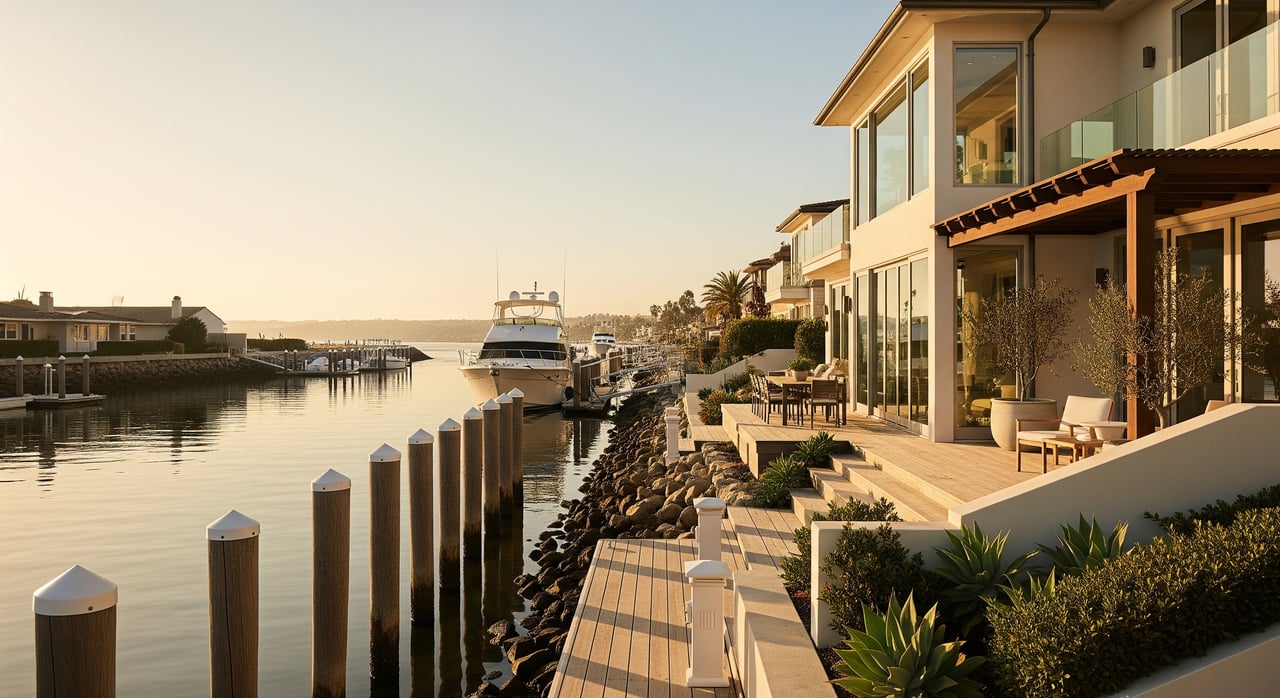
- Private bayfront homes on Linda Isle, Balboa Island, Lido Isle, and along the harbor often end at a bulkhead or the mean high tide line. Waterward areas, including the seabed under docks and slips, are typically city or state controlled.
- Residential docks and slips are frequently authorized by a lease or permit. You may own the structure but not the land beneath it.
- Marinas and commercial uses usually operate under formal leases with commercial terms, such as percentage rent and detailed maintenance obligations.
Permits and approvals you may see
- Long-term leases for docks, marinas, and certain over-water structures
- Revocable permits or license agreements that allow use but can be terminated
- Mooring permits, slip agreements, bulkhead permits, and encroachment permits for improvements
Costs and obligations to expect
Owning the upland does not eliminate harbor-related costs. Expect a mix of recurring and transactional expenses:
- Ground or lease rent paid to the lessor, often with CPI increases, periodic reappraisals, or percentage rent for commercial operations
- Harbor fees like mooring or slip fees, vessel registration, transfer or assignment fees, and processing fees for alterations
- Maintenance and repairs for docks, floats, bulkheads, and seawalls, which are commonly the leaseholder’s responsibility
- Insurance requirements that typically include liability and property coverage naming the lessor as an additional insured
Property taxes on leaseholds
Leasehold interests can affect property tax treatment. In some cases, assessors value the leasehold estate when terms are long and rent is below market. Improvements such as docks and bulkheads are generally taxable. Clarify who pays the tax on improvements and how reassessment may work at sale.
Financing, title, and appraisal
What lenders look for
Many lenders scrutinize leaseholds. A common requirement is that the remaining lease term exceeds the loan term by a margin. Government-backed loan programs have specific leasehold rules. Short remaining lease terms can limit loan choices or increase costs.
Lease clauses that matter to lenders
- Assignment and subletting rules, including whether the lessor must consent to a sale
- Subordination and mortgagee protection language so lenders are protected
- Renewal options, rent reset mechanics, and any automatic termination on default
Title insurance and underwriting
Title companies may add exceptions and require endorsements for leaseholds, public trust issues, and recorded reservations. Work with a title team that knows coastal leases and Newport Harbor.
Value and resale impacts
Leasehold status can reduce marketability compared with fee simple comparables, especially with shorter remaining terms, steep rent escalations, or uncertain renewals. Appraisers weigh the lease term, rent schedule, maintenance obligations, and what happens to improvements at lease end. Buyers often factor in higher carrying costs and financing limits.
Climate, insurance, and risk
Waterfront properties face unique risk profiles. Flood and coastal hazard exposure can raise premiums or limit coverage. Sea level rise may influence future maintenance needs, such as bulkhead upgrades, and can affect long-term lease economics. Leases often allocate repair and adaptation duties to the leaseholder, so confirm your obligations carefully.
Due diligence checklists
Documents to gather
- Fully executed lease or permit, all exhibits, amendments, and historical versions showing rent history and options
- Assignment and consent provisions; any recorded easements, revocable permits, or encroachment agreements
- Estoppel certificate or letter from the lessor stating current rent, defaults, transfer rules, and interpretation of key clauses
- Title report with exceptions tied to tidelands, public trust reservations, leases, and easements
- Property tax records and assessor’s valuation; ask about leasehold assessment practices
- Harbor fee schedules and municipal code sections governing tidelands uses and transfers
- Insurance requirements per the lease and current policy declarations
- Engineering or condition reports for bulkheads and docks; any environmental records tied to dredging or shoreline work
- Copies of coastal permits and approvals that govern your structure or use
Key lease terms to evaluate
- Remaining term and any options to renew, including how renewals are exercised
- Rent schedule with escalation method, such as CPI, fixed steps, or market resets
- Assignment and subletting rules, lessor consent process, and typical approval timing
- Responsibility for maintenance, capital improvements, and removal of improvements at lease end
- Insurance, indemnity, casualty, and condemnation provisions
- Lessor rights to terminate, change use, or require public access
- Mortgagee protections and whether the lease is subject or subordinate to future grants
Red flags to watch
- Short remaining term without reliable renewal options
- Market-rate resets on renewal that may cause a sharp rent increase
- Lessor rights to terminate or take improvements without fair compensation
- Assignment restrictions that block sale or require costly approvals
- Outstanding code violations or unresolved permit issues on docks or bulkheads
- Lack of mortgagee protection or predictable estoppel practices
Practical steps
For sellers
- Request a current estoppel and a plain-language lease summary from the lessor before listing
- Provide engineering reports and maintenance records for docks and bulkheads
- Disclose all lease and fee obligations early so buyers and lenders can underwrite cleanly
For buyers
- Engage a title company experienced in coastal leaseholds and a real estate attorney to review the lease
- Ask your target lenders to pre-approve the specific leasehold before you open escrow
- Budget for near-term repairs, ongoing maintenance, and potential transfer or assignment fees
Real-world scenarios
- Long lease, steady rent, lender-friendly terms. Properties with strong mortgagee protections and predictable escalations are closer to fee simple in financeability and are often easier to sell.
- Short remaining term, no renewal, removal duty. Expect a price discount and limited financing. Cash or specialty lenders may be required.
- Revocable permit instead of a lease. Heightened risk because authority can be withdrawn. Conventional financing may be challenging without added review.
Work with a waterfront specialist
Tidelands and leaseholds shape how you live, boat, and invest in Newport Harbor. With the right plan and clear documents, you can buy or sell with confidence. If you want a tailored valuation or property review that factors in lease terms, fees, financing, and resale, schedule a private consultation with Susie McKibben.
FAQs
What is the difference between tidelands and fee simple ownership in Newport Beach?
- Tidelands are public trust areas under tidal waters, while fee simple is private ownership of the upland; docks often sit on leased tidelands even when the home is fee simple.
Can you finance a home with a dock on leased tidelands in Newport Beach?
- Yes, but lenders review lease terms closely and usually require a remaining lease term that exceeds the loan term, plus lender protections in the lease.
What recurring costs should you budget for a Newport Harbor dock lease?
- Plan for ground or lease rent, harbor fees, transfer or processing fees, required insurance, and ongoing maintenance for docks, floats, and bulkheads.
How do lease terms affect resale value in Newport Beach?
- Short terms, steep rent escalations, or uncertain renewals can reduce marketability and price compared to similar fee simple properties with private water access.
Who regulates dock repairs or expansions in Newport Harbor?
- The City of Newport Beach manages harbor uses and permits, and the California State Lands Commission retains oversight for certain trust lands; some projects need multiple approvals.
How are property taxes handled for improvements on leased tidelands?
- Improvements like docks and bulkheads are generally taxable; clarify who pays and whether a sale will trigger reassessment, especially if rent is below market.